Many people believe there were only a handful of concentration camps during the Holocaust, but in reality, there were over 44,000 camps and incarceration sites. The Nazis categorized camps into transit camps, extermination camps, forced labor camps, concentration camps, and prisoner-of-war camps.
Despite their different classifications, the overarching purpose of most of these camps was the systematic persecution and eventual eradication of those imprisoned there, with the possible exception of some prisoner-of-war camps.
While the majority of victims in these camps were Jewish, other groups also suffered and were targeted for extermination, including Romani people, political prisoners, disabled individuals, and others deemed undesirable by the Nazi regime.
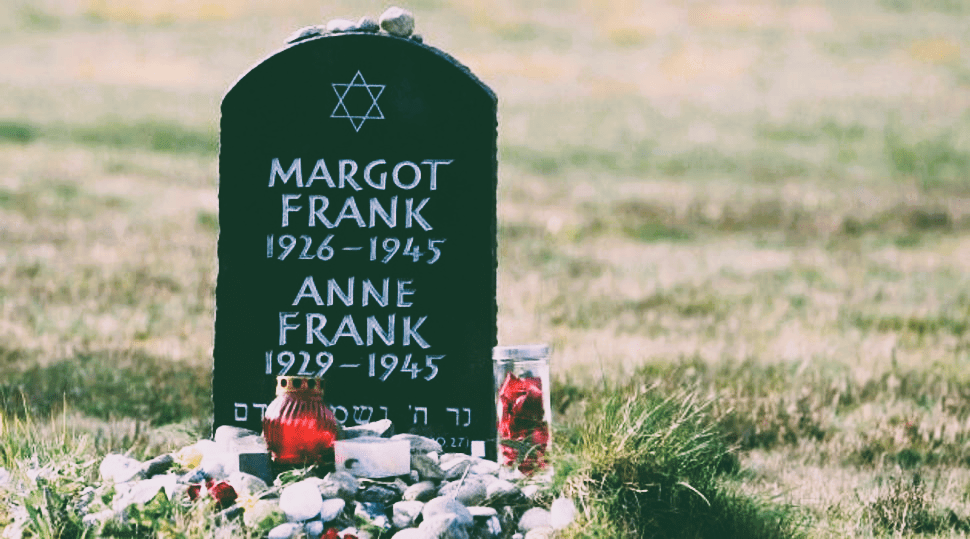
In February or March 1945, Anne and Margot Frank tragically died in the Bergen-Belsen concentration camp, likely from typhus. The teenage sisters were among approximately 50,000 Holocaust victims who perished at Bergen-Belsen. At the time, their deaths went largely unnoticed, except by the fellow prisoners who shared in their suffering.
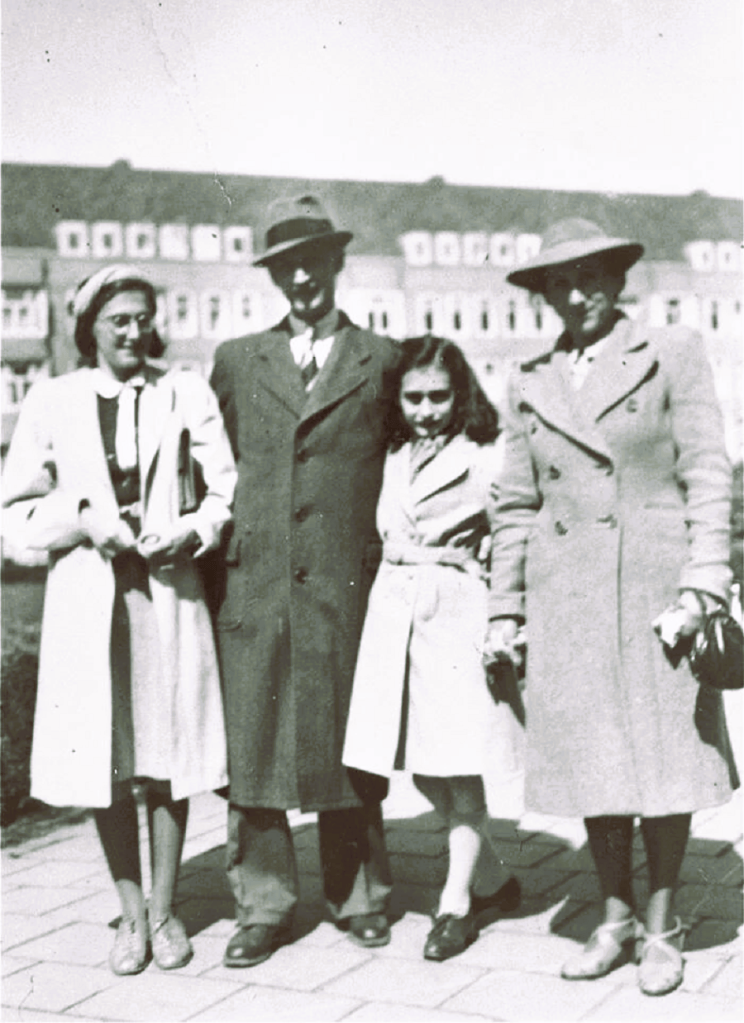
The Nazis first sent the Frank family to prison and then transferred to the Westerbork transit camp in the Netherlands. After about a month, they were deported to Auschwitz-Birkenau in Nazi-occupied Poland.
According to the Anne Frank House, their journey to Auschwitz lasted three harrowing days. Packed into cattle wagons with approximately 1,000 other people, they endured inhumane conditions—little food or water, no space to move, and only a single bucket to serve as a toilet.
Upon arriving at Auschwitz, the guards immediately separated men from women. This was the last time Otto Frank saw his wife and daughters. Prisoners were then subjected to a brutal selection process. Those deemed unfit for forced labor were sent to the gas chambers and killed.
Anne and her sister Margot remained in Auschwitz for about a month before being transported again, this time to the Bergen-Belsen concentration camp in northern Germany, in November 1944. Their parents stayed behind at Auschwitz, where Edith Frank tragically died in January 1945.
At Bergen-Belsen, Anne and her sister Margot endured the inhumane conditions that plagued the camp, which imprisoned Jews, Roma people, Jehovah’s Witnesses, gay men, “a-socials,” political prisoners, and prisoners of war.
Bergen-Belsen was described by Nanette Konig, a friend and former classmate of Anne who was also imprisoned there, as “a hell where people were not exterminated immediately, but died from hunger, dysentery, typhus, cold, exhaustion, beatings, torture, and exposure,” according to the Times of Israel.
“[Anne] looked like a walking skeleton, just like me,” Konig recalled, describing the emaciated, starving Anne she encountered at the camp in 1944.
Anne and Margot lived in a makeshift tent at the camp, where food and fresh water were scarce. They had to use a ditch as a toilet and slept on straw-filled mattresses infested with lice, which compounded their suffering.
Nanette Blitz, another former classmate of Anne’s, saw her in December 1944 and later described her heartbreaking condition: “She couldn’t bear to wear her clothes anymore because they were crawling with lice,” Blitz recalled.
The lice-infested conditions at Bergen-Belsen not only made daily life unbearable but also spread deadly diseases such as typhus. In early 1945, typhus swept through the camp, and both Anne and Margot quickly succumbed to the illness.
Typhus is a devastating disease, with symptoms including muscle pain, headaches, nausea, intense thirst, high fevers, rashes, and delirium. Even in ordinary conditions, typhus was life-threatening in a world without antibiotics. In the overcrowded, filthy environment of a concentration camp, it became even more deadly. Victims often endured two to three weeks of agony before succumbing to the illness.

Anne Frank’s final days were described as harrowing. Gena Turgel, a fellow prisoner, recalled the horrifying state Anne was in during her last hours. Speaking to The Sun in 2017, Turgel said, “She was delirious, terrible, burning up. I gave her cold water to wash her down. We did not know she was special, but she was a lovely girl. I can still see her lying there with her face, which was so red as she had a breakout. And then she died.”
By late February 1945, another prisoner, Rachel van Amerongen, recalled that the Frank sisters “simply weren’t there anymore.” Margot, just 19 years old, died first, followed shortly by Anne, who was only 15. Both likely succumbed to typhus.
For decades, Anne’s death was believed to have occurred in March 1945, with her official date of death recorded as March 31. However, research conducted by the Anne Frank House in 2015 suggested that Anne and Margot likely died earlier, in February 1945.
Survivor Irma Sonnenberg Menkel said this about Bergen Belsen and her encounter with Anne Frank.
“After I arrived at the Bergen-Belsen barracks, I was told I was to be the barracks leader. I said, “I’m not strong enough to be barracks leader.” They said that would be disobeying a command. I was terrified of this order but had no choice. It turned out that the Nazi commandant of the camp was from my hometown in Germany and had studied with my uncle in Strasbourg. This coincidence probably helped save my life. He asked to talk to me privately and wanted to know what I had heard of my uncle. I said I wanted to leave Bergen-Belsen and maybe go to Palestine. The commandant said, “If I could help you, I would, but I would lose my head.” About once every three weeks, he would ask to see me. I was always afraid. It was very dangerous. Jews were often shot over nothing. After the war, I heard he had committed suicide.
There were about 500 women and girls in my barracks. Conditions were extremely crowded and unsanitary. No heat at all. Every morning, I had to get up at 5 [a.m.] and wake the rest. At 6 a.m., we went to roll call. Often, we had to wait there for hours, no matter the weather. Most of the day, we worked as slave labor in the factory, making bullets for German soldiers. When we left the Netherlands I had taken only two changes of clothes, one toothbrush, no books or other possessions. Later I had a few more clothes, including a warm jacket, which came from someone who died. Men and women lined up for hours to wash their clothes in the few sinks. There were no showers in our barracks. And no bedding. The day was spent working and waiting. At 10 p.m., lights out. At midnight, the inspection came—three or four soldiers. I had to say everything was in good condition when, in fact, the conditions were beyond miserable. Then up again at 5 a.m.
One of the children in my barracks toward the end of the war was Anne Frank, whose diary became famous after her death. I didn’t know her family beforehand, and I don’t recall much about her, but I do remember her as a quiet child. When I heard later that she was 15 when she was in the camps, I was surprised. She seemed younger to me. Pen and paper were hard to find, but I have a memory of her writing a bit. Typhus was a terrible problem, especially for the children. Of 500 in my barracks, maybe 100 got it, and most of them died. Many others starved to death. When Anne Frank got sick with typhus, I remember telling her she could stay in the barracks – she didn’t have to go to roll call.
There was so little to eat. In my early days there, we were each given one roll of bread for eight days, and we tore it up, piece by piece. One cup of black coffee a day and one cup of soup. And water. That was all. Later there was even less. When I asked the commandant for a little bit of gruel for the children’s diet, he would sometimes give me some extra cereal. Anne Frank was among those who asked for cereal, but how could I find cereal for her? It was only for the little children and only a little bit. The children died anyway. A couple of trained nurses were among the inmates, and they reported to me. In the evening, we tried to help the sickest. In the morning, it was part of my job to tell the soldiers how many had died the night before. Then, they would throw the bodies on the fire.
I have a dim memory of Anne Frank speaking of her father. She was a nice, fine person. She would say to me, “Irma, I am very sick.” I said, “No, you are not so sick.” She wanted to be reassured that she wasn’t. When she slipped into a coma, I took her in my arms. She didn’t know that she was dying. She didn’t know that she was so sick. You never know. At Bergen-Belsen, you did not have feelings anymore. You became paralyzed. In all the years since I almost never talked about Bergen-Belsen. I couldn’t. It was too much.
When the war was over, we went in a cattle truck to a place where we stole everything out of a house. I stole a pig, and we had a butcher who slaughtered it. Eating this—when we had eaten so little before—was bad for us. It made many even sicker. But you can’t imagine how hungry we were. At the end, we had absolutely nothing to eat. I asked an American soldier holding a piece of bread if I could have a bite. He gave me the whole bread. That was really something for me.
When I got back to the Netherlands, no one knew anything. I finally found a priest who had the address where my sister and daughter were. I didn’t know if they were living or not. They were. They had been hidden by a man who worked for my brother. That was luck. I found them and began crying. I was so thin that, at first, they didn’t recognize me.”
Sources
https://allthatsinteresting.com/how-did-anne-frank-die
https://edition.cnn.com/2015/04/01/europe/anne-frank-date-of-death/index.html
https://www.mirror.co.uk/news/world-news/anne-frank-gave-up-after-30632013
Donations
Your readership is what makes my site a success, and I am truly passionate about providing you with valuable content. I have been doing this at no cost and will continue to do so. Your voluntary donation of $2 or more, if you are able, would be a significant contribution to the continuation of my work. However, I fully understand if you’re not in a position to do so. Your support, in any form, is greatly appreciated. Thank you. To donate, click on the credit/debit card icon of the card you will use. If you want to donate more than $2, just add a higher number in the box left from the PayPal link. Your generosity is greatly appreciated. Many thanks.
$2.00


 History of Sorts
Leave a reply to dirkdeklein Cancel reply