
Maastricht is one of my favourite cities. I grew up only about 10 miles away and visited it many times. It is the most south-eastern city in the Netherlands and is well known for its proximity to Belgium and Germany. It is also the home of violin virtuoso Andre Rieu and his Strauss Orchestra.
In Europe, it is known for the treaty which was signed there on February 7, 1992. It shaped the future of the EU.
But I am not going to talk about any of that. I want to add a name to the Maastricht narrative and would love it if, in years to come, people would say, “Maastricht, oh yes, that is the place where Derk van Assen and his wife Berendje are from”
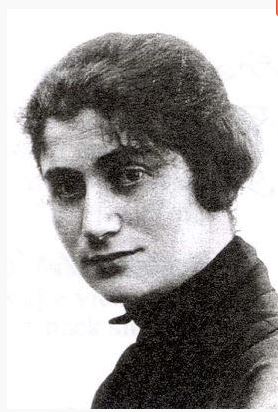
Derk and Berendje van Assen were heroes in every sense of the word. They paid the ultimate price for helping their neighbours.
Derk was active in the underground resistance from the beginning of
the war, in May 1940. Initially, he was not part of an organised group, but later he joined the Versleyen group, a group of tax officials within the L.O. (National Organisation for Help to Those in Hiding); he was also a member of the Trouw group, the national Christian resistance group.
In Derk’s Christian beliefs and humanist principles, all people were equal, and he was prepared to risk everything to save the lives of Jews and others. Using his many talents, Derk contributed during the war to illegal newspapers, organised national information networks and offered professional document forgers a place to work in his home. Derk and Berendje were friendly with Isidore and Frederika Schaap, who came to Maastricht in 1939 with their daughter Hetty. Isidore headed a branch of a ladies’ fashion firm that was based in Rotterdam, and Berendje was one of his customers.
The Shaap family was totally integrated into the more Burgundian lifestyle of the southern Netherlands, and sometimes they even went with Derk and Berendje to the Reformed Church on Sunday mornings.

In the summer of 1942, the Schaaps received orders to report for deportation; Derk helped them find a place to hide. They spent their first couple of nights hiding with a family who owned an optician’s shop in Maastricht. During this time, they altered their identity cards and removed the “J”, which let them travel with less risk. The next day, the Schaap family took a train to Utrecht, to the home of one of Derk’s cousins. They soon moved in with relatives of the van Assens in Hillegom, South Holland. The Schaap family then had to split up Isidore, and Frederika moved to Amsterdam, where they were later arrested.
The Police Commissioner of Maastricht had requested that Isidore Schaap and Frederika Roza Schaap-Kamerling, both residents of Maastricht, be located, detained and brought to trial. They were suspected of having changed their place of residence without the required authorisation. This description referred to Jews who had gone into hiding.
On July 26, 1943, Derk was arrested in Maastricht after having been under surveillance and shadowed for some time by the SD (Sicherheitsdienst). The SD had recruited “Blonde Mien”, a resistance activist. Mien was tasked with gathering information about Derk’s contacts, but before she could, the authorities apprehended and incarcerated Derk in the local prison. In this prison, Oberscharführer Richard Nitsch interrogated Derk for seven weeks, during which time Derk’s colleagues were planning his escape. However, the authorities discovered the plot and, to abort it, Nitsch and two other SD men executed Derk in Horst, Limburg, on September 14, 1943.

Meanwhile, Berendje was arrested and imprisoned, first in Maastricht, then in Haaren, and finally in Vught. From there she was deported to Camp Ravensbrück in Germany, where she died on February 2, 1945.
Two heroes who gave their lives for others. After the war, the Air Chief Marshal and Vice Commander of the Allied Expeditionary Forces decorated Derk and Berendje for “assistance to officers of the marine, land and air forces to escape from imprisonment, or to avoid being taken prisoner by the enemy.”
On September 6, 1989, Yad Vashem awarded Derk van Assen and Berendina van Assen-Grolleman the honorary title of Righteous Among the Nations.

Frederika Roza Schaap-Kamerling was born in Wildervank on February 28, 1894. She was murdered at Auschwitz on January 28, 1944. She reached the age of 49.
Isidore Schaap was born in Rotterdam on April 24, 1894. He was murdered at Auschwitz on April 8, 1944. He reached the age of 49.
Their daughter, Hetty Schaap, was born in Nieuwegein on September 14, 1925. She survived the war and lived till the age of 90, dying on January 12, 2016.
–––––
Sources

https://www.tracesofwar.nl/sights/67272/Monument-Derk-van-Assen.htm
https://www.joodsmonument.nl/en/page/472202/child-of-isidore-schaap-and-his-family
Donation
Your readership is what makes my site a success, and I am truly passionate about providing you with valuable content. I have been doing this at no cost and will continue to do so. Your voluntary donation of $2 or more, if you are able, would be a significant contribution to the continuation of my work. However, I fully understand if you’re not in a position to do so. Your support, in any form, is greatly appreciated. Thank you. To donate, click on the credit/debit card icon of the card you will use. If you want to donate more than $2, just add a higher number in the box left from the PayPal link. Your generosity is greatly appreciated. Many thanks.
$2.00


Leave a Reply