
In November 1942, Fritz Pfeffer joined the Frank and Van Pels families in hiding, bringing the total number of people to eight. He was a solitary figure among two families and shared a room with the adolescent Anne Frank. Fritz was also a father—he had a son, Werner, with his first wife, Vera Henriette Bythiner. Werner survived, but Vera was murdered in Auschwitz on September 30, 1942, less than two months before her ex-husband went into hiding with the Frank family.
The parents of Vera had been living in the Netherlands since 1936. Vera arrived in 1938 and initially stayed with them. Later, she lived for some time on Roompotstraat in Amsterdam with relatives on her mother’s side, possibly as a domestic servant. In 1941 and 1942, Vera Bythiner lived at two other addresses in Amsterdam before she was officially deregistered on August 24, 1942, as “departed to Germany.
Vera Henriette Bythiner was born on March 31, 1904, in Posen, Prussia (now Poznań, Poland), to Joseph Bythiner and Irma Auerbach. She had a brother, Klaus Franz Joachim Bythiner, born in 1916.
On April 30, 1926, Vera married Fritz Pfeffer in Zoppot (now Sopot, Poland). Their son, Werner Peter Pfeffer, was born on April 3, 1927, in Berlin. The couple divorced on January 5, 1933, in Berlin, with Fritz gaining custody of Werner.
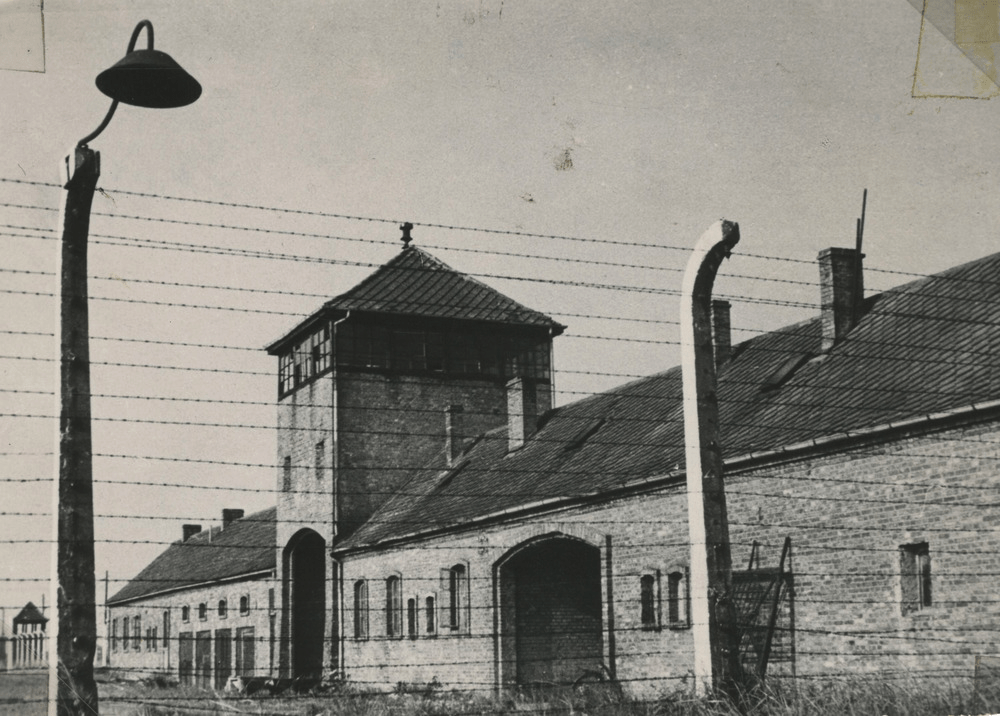
In 1938, Vera fled Nazi persecution in Germany and sought refuge in Amsterdam, Netherlands, where her parents had relocated in 1936. She lived at several addresses in Amsterdam, including Roompotstraat 11 huis, before being deported. On August 24, 1942, she was transported to Auschwitz (although some sources say Sobibor) where she was murdered on September 30, 1942.
Vera’s son, Werner, survived the war. In December 1938, he was sent to England via the Kindertransport, later emigrating to the United States, where he changed his name to Peter Pepper and established a successful office supplies company.
Werner Pfeffer

Werner Pfeffer was the son of Fritz Pfeffer and his first wife, Vera Bythiner.
Born to Fritz and Vera, Werner’s early life was shaped by their divorce in 1933, after which his father was awarded custody. Fritz, a dedicated parent, was supported by their housekeeper, Else Messmer, who also frequently cared for Werner.
Following Kristallnacht—the violent Nazi-organized pogrom against Jews on the night of November 9–10, 1938—Fritz Pfeffer made the difficult decision to leave Germany. He arranged for Werner to escape on a boat to England. While some accounts suggest that housekeeper Else Messmer placed Werner on the boat, others credit Charlotte Kaletta, Fritz’s partner, with the task. According to British Home Office records, Werner arrived in England on December 1, 1938, under the Refugee Children’s Movement. Meanwhile, Fritz’s registration card, recorded by the Amsterdam Immigration Service on January 16, 1939, noted simply: “Is in London.”
In 1943, upon turning sixteen, Werner fell under the legal category of “enemy national” due to Britain’s war with Germany. As a result, he underwent a security screening. However, several individuals vouched for his integrity, and authorities determined that internment was unnecessary. To avoid the dangers of London’s bombings, he relocated to Minehead, where he served as an A.R.P. (Air Raid Precaution) Messenger and attended Polytechnic College.
Anne Frank later wrote that Fritz Pfeffer frequently spoke about “his (2nd)wife and children”—a phrase that must have referred to his only child, Werner.
After the war, Otto Frank, the only survivor of the Secret Annex, wrote to Werner on September 20, 1945. At the time, Fritz Pfeffer’s fate was still unknown. In his letter, Otto described his friendship with Fritz and his understanding of Pfeffer’s efforts to marry Charlotte Kalettam which was posthumously deemed to have taken place in 1937, by decree after the war. Whether Werner ever responded remains unclear.
Following the war, Werner emigrated to the United States. In 1952, he founded the company Peter Pepper Products, eventually assuming the name Peter Pepper. In the mid-1990s, he was interviewed by Jon Blair for the documentary Anne Frank Remembered, offering insight into his past.
sources
https://www.annefrank.org/en/anne-frank/main-characters/fritz-pfeffer/
https://www.oorlogsbronnen.nl/tijdlijn/4144e706-c1c7-4760-be9e-f4af3bdf081b
https://research.annefrank.org/en/personen/ebfcf860-0a6a-45d6-bfb5-d2a31bbf01a6/
https://www.findagrave.com/memorial/193280736/vera_henriette-pfeffer
https://www.joodsmonument.nl/nl/page/174600/vera-henriette-pfeffer-bythiner
Please support us so we can continue our important work.
Donation
Your readership is what makes my site a success, and I am truly passionate about providing you with valuable content. I have been doing this at no cost and will continue to do so. Your voluntary donation of $2 or more, if you are able, would be a significant contribution to the continuation of my work. However, I fully understand if you’re not in a position to do so. Your support, in any form, is greatly appreciated. Thank you. To donate, click on the credit/debit card icon of the card you will use. If you want to donate more than $2, just add a higher number in the box left from the PayPal link. Your generosity is greatly appreciated. Many thanks.
$2.00
 History of Sorts
Leave a comment