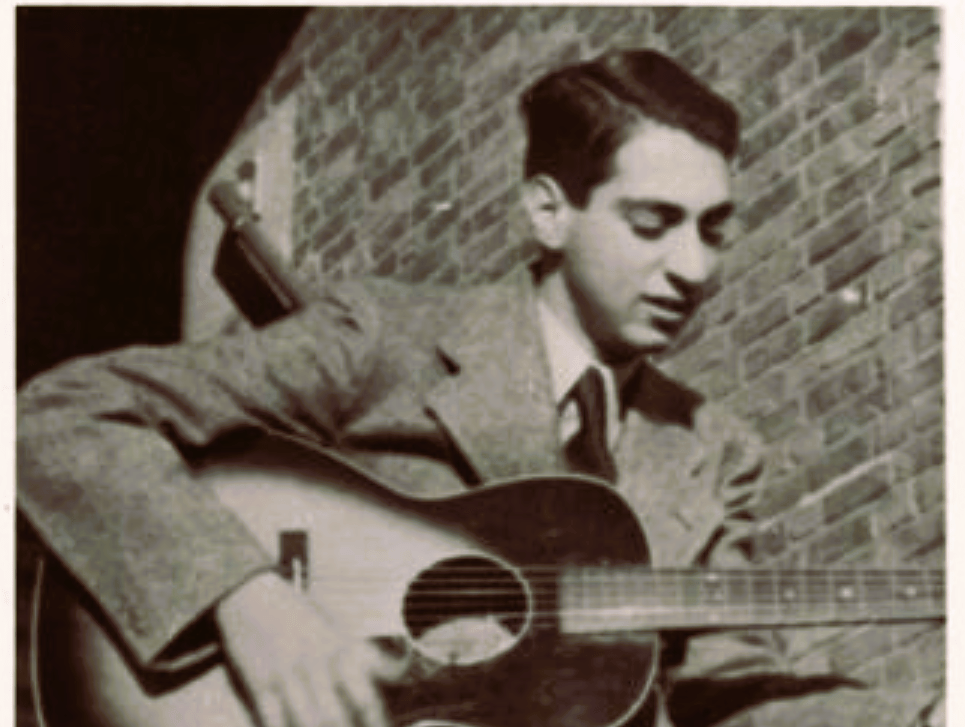
The fact that so many were murdered during the Holocaust is hard to fathom, and it is often compounded by personal stories. None so sad as that of Heinz Felix Geiringer. It is not clear if he died just before the end of the war in Europe or shortly after the end. Several databases list different dates (anywhere from 26 April 1945 to 10 May 1945) for his death. One thing that is certain—he died in Mauthausen.
Heinz Felix Geiringer was born in Vienna on July 12, 1926. He had one sister, Eva. His father, Erich Geiringer, was a successful Jewish businessman.
By 1938, when German troops marched into Austria to cheer crowds waving Nazi flags, life had become increasingly grim for Jewish Austrians. As borders closed to refugees around Europe, the family hurriedly made plans to flee. Erich found work in the Netherlands, and Heinz was sent on ahead, travelling alone aged 13 after being badly beaten up at school, with Eva and her mother, Fritzi, following once they had sold what possessions they could. The family was reunited in Amsterdam in February 1940, and a normal-style life resumed. In February 1940, the family came to live in Amsterdam at Merwedeplein 46-I, opposite Frank’s family home.

Heinz was very musical. It turned out that there was a piano in the house, and he received piano lessons again. He was a natural talent quickly learning Chopin, playing jazz by ear and guitar.
After the German invasion, the family tried in vain to flee to England. In July 1942, Heinz received a call to report for employment in Germany, and the family decided to go into hiding.
Fritzi and Eva found a hiding place at an address in Amsterdam South. Erich and Heinz hid with the Katee-Walda couple in Soestdijk, and Heinz began to paint and write poems. The paintings were done on what was to hand—faint stripes can be seen on tea towels used for some. Some are sunny, some are rural landscapes, as if glimpsed from a window and in one, it was a couple playing tennis. “It was all fantasy,” Eva said of the subjects.

To keep the family hidden, Katee demanded more money. Erich and Heinz were forced to look for a safe house somewhere else.
By May 1944, the Geiringers had evaded capture for two years. Eva and her mother avoided almost weekly searches by hiding and crouching in a tiny cavity behind a false wall. The woman hiding Erich and Heinz began to blackmail them for more money. A Dutch nurse, Miep Braams, offered another person refuge. She turned out to be a double agent—who betrayed 200 people, including her own fiance. One of Braams’ fellow collaborators was Branca Simons, a Jewish woman who had been arrested on 9 June 1943. Simons was given a choice by the Security Service to be deported or to help track down Jews in hiding.
The Geiringer family was arrested on 16 May 1944 and sent to Westerbork. On 19 May 1944, they were deported. Heinz and his father were evacuated from Auschwitz on 18 January 1945 and sent to Mauthausen. After a seven-day death march they arrived there on 25 January and that is probably where Heinz died of exhaustion on April 26, 1945. He reached the age of 18. His father also did not survive the camp.
Eva was saved from being sent straight to Auschwitz-Birkenau after her mother insisted she wear an overcoat and frumpy hat that made her look older than 15. She had many other narrow escapes, including being saved from typhus, thanks to the intervention of a cousin, Minni. Because Minni’s nursing experience was advantageous to the Nazis, she had extra rations of food to share with Eva and her mother. Mother and daughter were lucky to be sent to work in the block where murdered inmates’ possessions were searched for valuables. It was known as Canada and seemed like a land of plenty.
They were rescued by the Russian army in January 1945. The emaciated Eva and Fritzi were nursed back to health by their Russian liberators, making their way back to the Netherlands via Odessa, Istanbul and Marseille. As the Holocaust survivors tried to rebuild their lives in Amsterdam, Otto Frank, who had also been in Auschwitz, visited them. In 1953, Fritzi Geiringer married Otto Frank, the father of Anne and Margot Frank.
Sources
https://www.tihapp.com/events/54923
https://www.joodsmonument.nl/en/page/121094/heinz-felix-geiringer

Donation
Your readership is what makes my site a success, and I am truly passionate about providing you with valuable content. I have been doing this at no cost and will continue to do so. Your voluntary donation of $2 or more, if you are able, would be a significant contribution to the continuation of my work. However, I fully understand if you’re not in a position to do so. Your support, in any form, is greatly appreciated. Thank you. To donate, click on the credit/debit card icon of the card you will use. If you want to donate more than $2, just add a higher number in the box left from the PayPal link. Your generosity is greatly appreciated. Many thanks.
$2.00
 History of Sorts
Leave a comment